
Breaking bad habits can feel like an uphill battle. Why do we find it so difficult to resist that late-night snack or to put down our phones? In this post, we will explore why bad habits are hard to break and provide a simple system to replace them with healthier alternatives. If you’ve struggled with maintaining good habits or want to make a positive change in your life, this guide is for you!

Understanding the Habit Loop
Every habit consists of a loop: a trigger, a behavior, and a reward. The trigger can be anything from your surroundings, emotions, or even the people around you. The behavior is your reaction to that trigger, and the reward is the satisfaction you receive from that behavior. Understanding this loop is crucial in breaking bad habits.
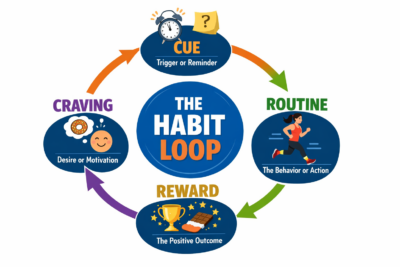
Why Bad Habits Are Hard to Break
The main reason bad habits persist is that they are often linked to emotional triggers. For instance, stress can lead to unhealthy snacking. When we recognize that our habits are not just random actions but responses to stimuli, we can start to address them more effectively.
**Step 1: Identify Your Triggers**
– **Reflection is Key:** Take note of when you find yourself engaging in the bad habit. Are there specific times of day or situations that prompt this behavior?
– **Emotional Check-In:** What emotions do you feel before and after engaging in the bad habit? Understanding your emotional state can help you identify triggers more clearly.
Step 2: Introduce Friction to Your Environment
To effectively break a habit, you need to create barriers between you and the trigger. Here are a few strategies:
– **Out of Sight, Out of Mind:** Keep unhealthy snacks out of reach or out of the house altogether.
– **Change Your Environment:** If your habit is triggered by a certain location, try to avoid that space when possible.
– **Limit Accessibility:** For example, charge your phone outside your bedroom to avoid late-night scrolling.
Step 3: Make Replacement Habits Easy
Instead of focusing solely on stopping a bad habit, replace it with a healthier option.
For example:
– **Short Workouts:** If you struggle to find time for exercise, commit to just 5 minutes of movement instead of a full workout.
– **Healthier Eating:** Instead of cutting out snacks entirely, focus on having healthier snacks readily available.
Step 4: Set Measurable Standards Instead of Goals
Goals can often feel overwhelming and lead to disappointment if not met. Instead, set standards that are easy to measure and repeat:
– **Standards Over Goals:** Aim for protein at two meals a day, or commit to a 10-minute walk twice a week. These are achievable and can be built upon over time.
Step 5: Reflect and Adjust
After implementing these changes, take time to reflect on your progress:
– **After a Week:** Check in with yourself. Have you noticed changes in your habits? What worked well, and what didn’t?
– **Adjust as Needed:** If something isn’t working, don’t be discouraged. Adjust your approach and keep trying. Breaking habits takes time, and flexibility is key.
Conclusion
Breaking a bad habit is a process that involves understanding triggers, introducing friction, and replacing the behavior with healthier options. Remember, it’s not about perfection but about progress. The next time you find yourself slipping into an old habit, take a moment to reflect and apply these steps.
For more resources to help you on your journey, be sure to check out our community and download helpful tools that can support your transformation.
Frequently Asked Questions
What are the most common triggers for bad habits?
Common triggers include stress, boredom, and specific environments or people that may encourage unhealthy behavior.
How long does it take to break a bad habit?
While it varies for everyone, research suggests it can take anywhere from 18 to 254 days to break a habit, depending on the individual and the habit itself.
Can I replace multiple bad habits at once?
While it may be tempting, it’s often more effective to focus on one habit at a time to increase your chances of success.