Strength Training After 50: What the First Month Actually Looks Like
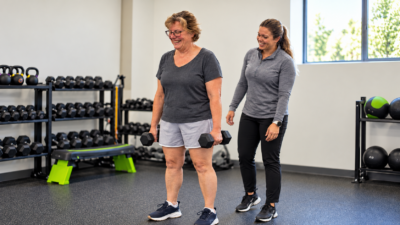
The first month of strength training after 50 is lighter, shorter and far less punishing than most people expect. You are not trying to get tired. You are teaching your body to produce and control force again, and that work looks almost boring from the outside.
Most people who quit in the first month quit because they went too hard in week one and spent week two sore, discouraged, and convinced this was not for them.
What changes about strength training after 50
Less than the internet suggests, and not in the way most articles frame it.
You still build muscle. You still get stronger. A review of eleven trials covering 834 adults aged 60 to 79 found that even elastic band training on its own improved muscle strength, in healthy people and in those already dealing with functional limitations. Bands are the lightest tool in the building and they still work.
What changes is the margin for error. Recovery takes a little longer, so the gap between enough and too much is narrower than it was at thirty. Connective tissue takes longer to adapt than muscle does, which is why the load has to climb slower than your enthusiasm wants it to. And you likely arrive with history: an old knee, a shoulder that clicks, a back that has opinions.
None of that is a reason to train less. It is a reason to train with a starting point that was measured rather than guessed.
Week by week
Week one. Two sessions. Mostly learning positions under very light load. You will leave thinking it was too easy. That is deliberate, and it is the single biggest predictor of whether you are still here in month three.
Week two. Same patterns, slightly more load. Some muscular soreness, usually in the legs and upper back, the kind that fades in a day or two. This is where a coach is checking whether what you feel is muscle or joint.
Week three. Something changes outside the gym before anything changes in it. Stairs feel different. Getting out of a low chair stops requiring a plan. People notice this before they notice any weight on a bar.
Week four. Load climbs properly for the first time, because by now there is real information about what you tolerate. This is the point where most people stop feeling like a beginner.
What progress looks like
Not the scale. We do not use it as a measure here and we do not frame training around shrinking.
Progress is capability. Carrying groceries from the car in one trip. A full walk on the Montour Trail without the back conversation starting at mile two. Getting down on the floor with a grandchild and back up without using furniture. Shovelling the driveway in January and not paying for it the next day.
Those are the things our members actually report, and they show up well before anything visible does.
What a session looks like
Small groups, a coach watching every rep, and a program written for you rather than for the room. Free weights, dumbbells, kettlebells, bands and medicine balls. No stack machines, because machines fix your path for you and your life does not.
Most people train two or three times a week. Sessions run about an hour and nobody is on the floor gasping at the end.
Where to start
Find out where you are before you load anything. Our Starting Point Session runs a full hour, involves no workout and no pitch, and you leave with a written report on where to begin and what to hold off on. It is free, and the report is yours either way.
If you are coming back from an injury rather than from a long gap, read how to lift safely after a back injury first. And if you finished physical therapy recently, your last appointment is a starting line covers what happens in the gap nobody schedules.
We run them at both locations: Coraopolis on Mulberry Street and Lawrence on Commerce Boulevard.
Frequently asked questions
Is 50 too old to start lifting weights?
No. Adults starting resistance training in their fifties, sixties and seventies reliably gain strength, and starting later does not prevent progress. The adjustment is pace, not possibility.
How often should I strength train at 50?
Two to three sessions a week is where most people land, with at least a day between. More than that early on tends to cost you recovery without buying extra progress.
How heavy should I lift when I am starting out?
Light enough that your last repetition looks like your first. If your mechanics change in the final two reps, the weight is teaching you to compensate rather than to get stronger.
Will strength training make my joints worse?
For most people, appropriately loaded strength training supports joints rather than wearing them down, and it is commonly recommended for exactly that reason. If you have a specific diagnosis, your clinician’s guidance comes first and we program inside it.
How long before I notice a difference?
Most people notice everyday tasks getting easier in the third or fourth week. Visible change takes longer and is not what we measure progress by.